Product Overview
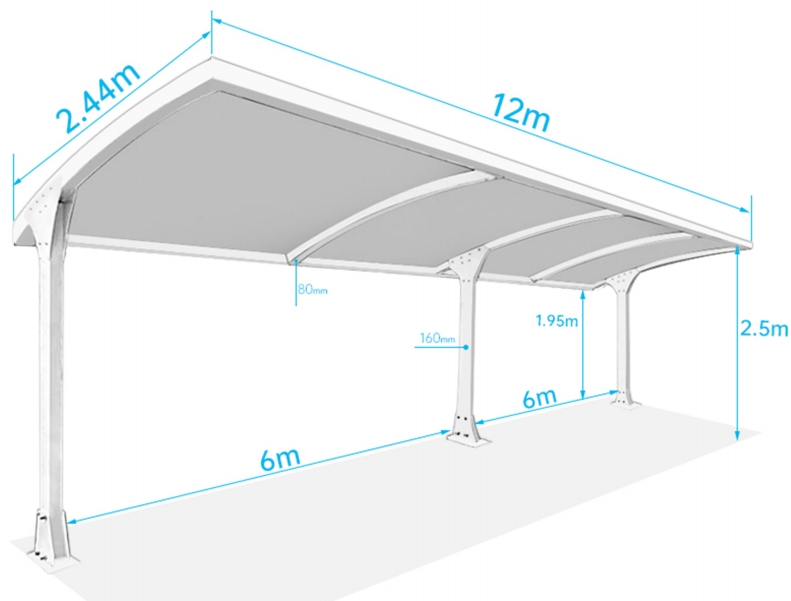
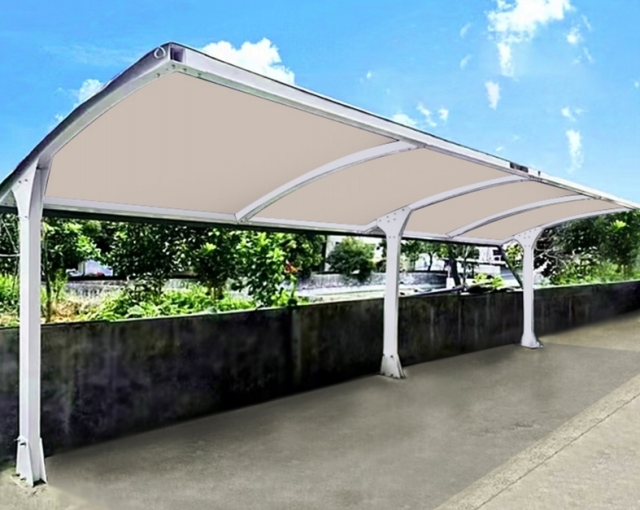
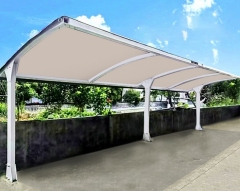
The Electric Bike Shed is an open-sided electric bike shelter: a powder-coated aluminum and steel alloy frame carrying a single arched canopy, with clear space where a wall and door would sit on a conventional shed. Bikes wheel in from either end and stand under cover, drying out in moving air instead of sitting in the damp — which matters when e-bikes with batteries and controllers are parked for hours in wet weather. The open sides do a second job, particularly on an electric bike shelter for apartment complexes: a property or facility team can see the whole parking area from the path or from a window above it, so damaged bikes, abandoned machines and casual tampering are noticed rather than hidden. Where a site already has canopy coverage, the shelter can be set as a run within that layout, sharing the look and finish of the structures around it. A run that suits the gap between two buildings, and the direction riders actually arrive from, is worth more than a standard unit squeezed into the space. Getting that right is where every quotation starts.
Frame, Materials & Finish
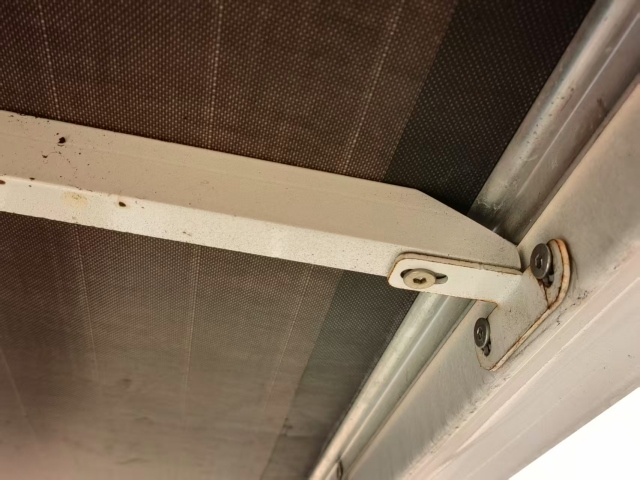
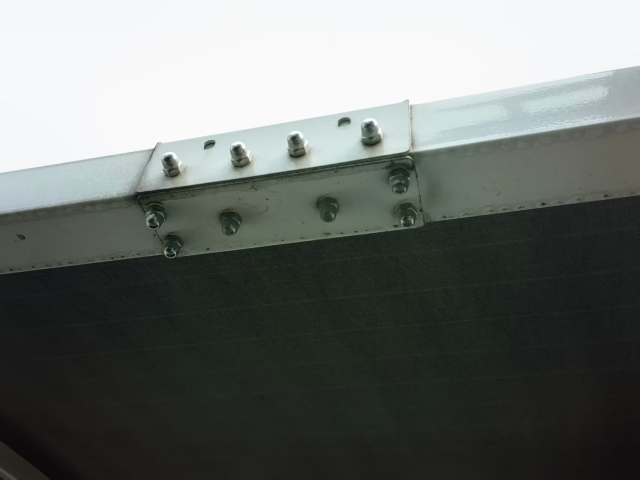
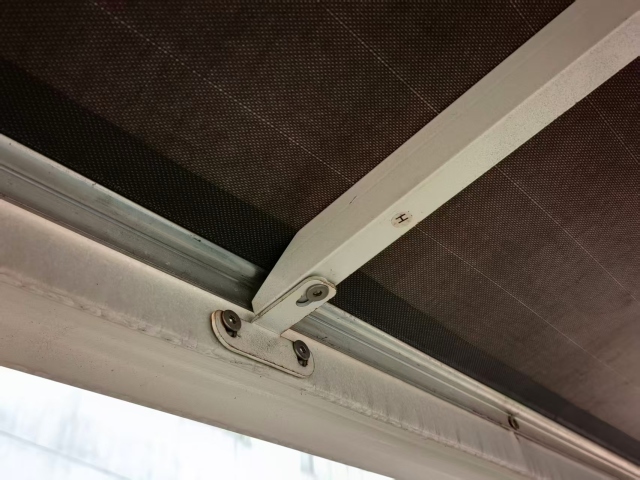
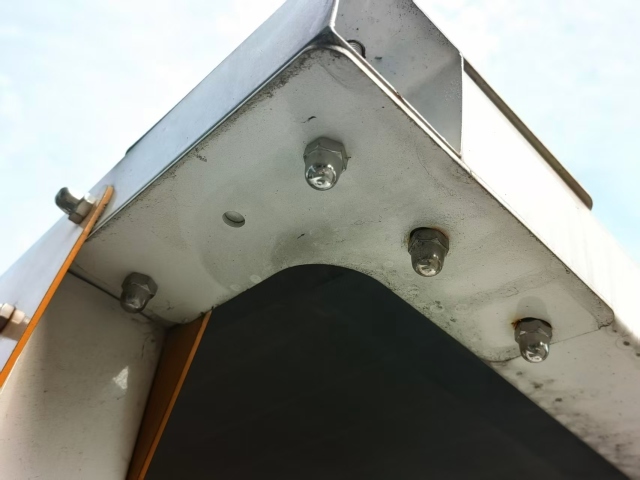
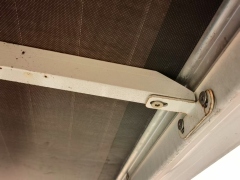
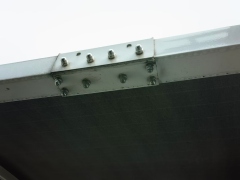
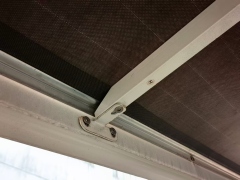
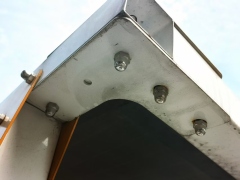
When we say the frame is an alloy, both metals are doing a job. Aluminum keeps the weight and the corrosion risk down; the steel content gives the structure the rigidity a bay needs when a loaded cargo bike is wheeled in and out several times a day. The mixed frame is also light enough for an installation crew to handle section by section, without lifting plant on site. The corrosion-resistant powder coating is applied as a dry powder and cured into a hard, even film. It covers the face of each tube and wraps the edges of the cut plates, which is where a thin wet paint film tends to fail first. The cured surface is matte, does not show handling marks the way a gloss finish does, and holds its colour instead of chalking in strong sun. Bolted bracket connections and edge rails hold the frame together. That matters over the life of the shelter: a section damaged by a vehicle or a clumsy delivery can be unbolted and replaced on its own, without cutting the structure apart. The canopy spans the run in an arched profile so water runs off the sides rather than standing on top. If the site is coastal, industrial or unusually humid, tell us before the order is fixed. Coating and fixing choices are worth settling with your electric bike shelter supplier at that stage rather than a season later.
Where the Shelter Is Used
| Setting | Typical installation |
| Apartment complexes and housing communities | Resident e-bike and cargo-bike parking beside entrances, bike stores or bin areas |
| Student and staff campuses | Term-time parking outside halls, libraries and teaching blocks |
| Offices and corporate sites | Covered staff and visitor parking within sight of building entrances |
| Commercial and leisure sites | Customer bike parking for shops, cafés and leisure venues |
| Municipal and transit locations | Public bike parking at stations, squares and park-and-ride sites |
| Private residential driveways | Cover for household e-bikes and cargo bikes where no garage is available |
Specifications
| Property | Value |
|---|
| Product type | Modular electric bike shelter |
| Structure | Open-sided arched canopy on a bolted frame |
| Frame material | Aluminum and steel alloy |
| Finish | Corrosion-resistant powder coating |
| Component fabrication | Precision laser-cut metal parts |
| Site assembly | Bolted brackets and splice joints, pre-cut sections |
| Weather performance | Resists UV degradation, precipitation and environmental wear |
| Quality management | ISO 9001 |
Installation & Assembly
- Plan the crew and the day: two people with hand tools can move and place the sections, and a short run goes up in one working session once the ground is ready.
- Set out the post positions on the prepared ground and check them against the approved drawing from your electric bike shelter supplier before anything is lifted.
- Lay the frame sections out and bolt the brackets loosely, working in the sequence shown on the assembly information supplied with the order.
- Stand the posts, check them plumb, and fix them to the ground with anchors suited to the surface — concrete, paving or a prepared base.
- Fit the beams and edge rails, square the run, then tighten every bolted joint to its final position.
- Fit the canopy and tension it evenly along the run so water sheds the way it should.
- Walk the finished shelter: re-check bolt torque and canopy tension, and confirm the approach from both ends is clear for riders.
Ordering & Delivery
- Send the site details — a sketch or plan with the footprint, bay count, ground surface and the direction riders will arrive from, plus whether the shelter stands alone or joins an existing canopy run. - Approved drawing before production — you sign off the layout drawing before we cut, so post positions and bay spacing are fixed in writing. Changes after approval can move the schedule, so raise them early. - Lead time — delivery schedules depend on the order and on any customization. Confirm the current lead time with our team once the drawing and quantity are final. - Shipping and export — One-stop export service: packing, documentation and shipment are coordinated as one consignment rather than split between separate forwarders. - During the project — as an electric bike shelter supplier we keep one team on your order from quotation through delivery, including questions from your installer on site. - Modular frame that can grow — bays are bolted units, so a run can be lengthened later by adding sections instead of replacing what already stands. Useful where rider numbers are still climbing. - Precision laser-cut components — tubes and plates arrive cut to length and pre-drilled, so brackets line up and the structure goes together in the order it was drawn. Repeat orders and phased sites stay predictable. - Powder-coated finish — the coating is cured hard and even, resists corrosion and keeps its colour, which removes the repainting cycle that a painted steel shelter puts into the maintenance budget. - Aluminum and steel alloy hybrid — the alloy gives the frame the stiffness a loaded bay needs while staying light enough for two people to lift a section into place, which keeps transport, handling and installation labour down. - Organised bays — bikes stand upright and spaced rather than leaning in a row, so handlebars and derailleurs take less knocks and the area is quicker to sweep and inspect. - Repeatable quality under ISO 9001 — production and inspection follow ISO 9001 quality management, so a second or third order matches the first in fit and finish. - Built around apartment and campus briefs — when you specify an electric bike shelter for apartment complexes, student campuses or commercial sites, the bay count and run length are set by the site rather than by a fixed unit. - One factory from frame to packing — as an electric bike shelter supplier we cut, coat and pack the order in our own workshop, so nothing passes to a subcontractor between production steps.
Scale & Supply Capability
Operating our own factory since 2004, we bring R&D, manufacturing and sales together in one company, with a team of more than 50 people. Buyers running property, parking and residential projects deal with the workshop directly, so customized designs, private-label production and wholesale quantities all pass through the same hands. Production is managed under ISO 9001 and every unit is checked before dispatch; packing, export documentation and shipping are handled as a one-stop service, and our after-sales team stays with you long after the goods arrive.
FAQ
What materials are used in the construction of the Electric Bike Shed?
The frame is an aluminum and steel alloy with a corrosion-resistant powder coating — aluminum to keep weight and corrosion down, steel for rigidity. Parts are cut and drilled to the drawing before coating, so brackets sit square when the sections are bolted together. The coating is cured into a hard film rather than a paint layer that has to be renewed.
Can I customize the size and finish of the Electric Bike Shed for my project?
Yes. Dimensions, bay layout, design features and powder-coat colour are all set for your project under OEM/ODM, and the modular frame lets the same design run from a small unit to a long bank of bays. Most of what we build is ordered as an electric bike shelter for apartment complexes with the bay count matched to resident numbers; campuses and commercial sites follow the same process with their own layout and finish.
How complex is the installation process for the Electric Bike Shed?
It is assembly rather than construction. Sections arrive cut and pre-drilled, connections are bolted, and there is no welding or hot work on site. Two people with hand tools can handle a short run; a longer run goes faster with a small team working from one end. Our technical team is available for questions while the work is under way.
What maintenance does the shelter need once it is in use?
Little beyond routine care. Hose the electric bike shelter down with water and a mild detergent when the site is being cleaned, check the bolted joints and canopy tension at the start of each season, and touch up any coating scuff made by a bike or a vehicle before it spreads. There are no moving parts to lubricate.
How is the number of bike bays worked out?
From the site rather than from a standard figure. We start with how many riders park today, how many of those bikes are e-bikes or cargo bikes, and how much room sits between the entrance and the parking point. Cargo and adapted bikes take more width per bay than a city bike, so flag them early, before the bay spacing is fixed.